
PETS
We recommend the following books:

Click on any above images to be taken to the Dog Oiler with helpful information.
Videos Worth Watching

Enjoy this PowerPoint all Pets + Essential Oils

Additional Resources
Essential Oil Vet Facebook Page
Pawsitive Principles Facebook Page
SpOIL Your Pet: A Practical Guide to Using Essential Oils in Dogs and Cats
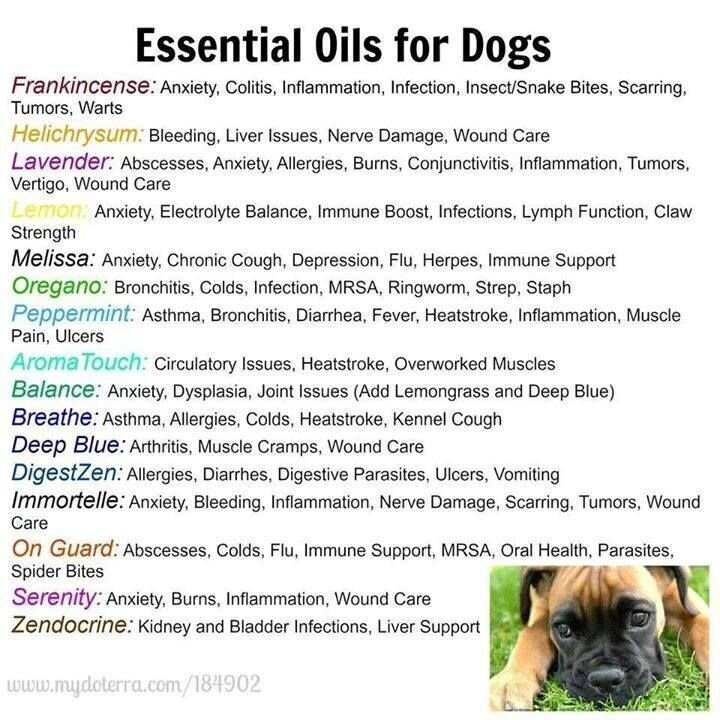
Essential Oils for Dogs Tear Pad from Oil Life

Using Essential Oils with Animals
This episode Dr. Janet Roark, a licensed veterinarian, will discuss using essential oils with the animals in your life. She'll answer questions like: Are essential oils beneficial to animals? What essential oils and applications methods are best for animals? and Are there any oils that I shouldn't use with animals?

Ask the Vets: Essential Oils for Your Pets
In this episode, In this episode Dr. Mia Frezzo and Dr. Janis Fisher sit down to discuss their top essential oil picks to help with some of the common challenges your cat or dog might face. Diffusing oils, Older Dogs and workout relief, irritated spots, digestive issues, insect bites and pest prevention,


Ask the Vets: Essential Oils for Your Pets
In this episode Dr. Larry McCaskill and Dr. Jeanette Yamamoto sit down to discuss their top essential oil picks to help with the common challenges your cat or dog might face. How do we apply, supporting respitory health, Giving Your Pet Essential Oils Internally, Supporting Cellular health, oils for small pets, Oils for Stress and Nervousness , Oils for Restful Sleep.
Keeping Pets Healthy and Happy
Contributed by Dr. Janet Roark
Veterinarian, Hill Country Mobile Veterinary Service
Introduction
If there is one thing I have learned in my lifetime of working with animals and their owners, it is that people love their animals and would do anything within their means to keep them healthy and happy for as long as possible. Pets have become an integral part of our families, and our homes would not be the same without them.
It’s probably not a surprise that pets can greatly improve the lives of the humans around them. One study shows that owning a dog can promote cardiovascular health.1 There are obvious positive health benefits when it comes to taking your dog for a walk, including it being good exercise, but there are also lesser known benefits, such as the positive social interactions that naturally occur when others smile at how adorable your pet is or ask if they can pet him or her. Another study indicates that pets can improve immunity and respiratory health in children.2 Pets can also decrease stress at the end of a long day.3 With all these and other benefits, it’s no wonder we have incorporated pets into our lives so closely.
Pets and Essential Oils
It’s important to keep our pets in mind as we use essential oils in our homes. Dogs and cats in particular have 200–300 million olfactory receptors (humans have only 5–6 million). Their sense of smell is very sensitive, so when you are diffusing, be sure to use a water-based diffuser like the Lumo® diffuser, and only diffuse 4–5 drops at a time in an open area where your pet can leave the room if desired.
Due to this sensitivity, there are a few oils to avoid with pets. Of course, we can use other oils instead. Here are a few suggestions:
Instead of Tea Tree (Melaleuca), use Geranium, Arborvitae, Myrrh, or Cedarwood.
Instead of Wintergreen, use Copaiba, Frankincense, or doTERRA AromaTouch®.
Instead of Cassia, use doTERRA On Guard®, Oregano, or Thyme.
Many oils can support the various body systems of your animals. When using oils topically with pets, be sure to consult with your veterinarian first. Always dilute oils down to 1–2 percent prior to application (100 drops of a carrier oil for every one drop of essential oil). I prefer using Fractionated Coconut Oil as a carrier oil but there are many others. Dilute even more for animals that are less than 10 lbs/5 kg.
Cardiovascular Support: Helichrysum, Cypress, Marjoram, Copaiba
Digestive Support: doTERRA DigestZen®, Ginger, Cardamom, Fennel, Coriander
Endocrine Support: Myrrh, Lemongrass, Geranium
Immune Support: Rosemary, Copaiba, doTERRA On Guard®, Melissa
Integumentary Support: Lavender, Frankincense, Myrrh, Helichrysum, Cedarwood, Geranium, Spikenard, Roman Chamomile, Melissa
Musculoskeletal Support: Frankincense, Copaiba, doTERRA AromaTouch®, Marjoram
Nervous System Support: Copaiba, Helichrysum, Turmeric, Sandalwood, doTERRA Balance®
Respiratory Support: doTERRA Breathe®, doTERRA On Guard®, Cardamom, Rosemary, Arborvitae
Urinary Tract Support: Copaiba, Lemongrass, Juniper Berry, doTERRA Zendocrine®
Conclusion
I know you want to keep your animals healthy, and in return, they will keep you healthy too. These general guidelines may help you in the selection of which oils you use and diffuse around your home to help keep you and your pets healthy and happy.
doTERRA Science blog articles are based on a variety of scientific sources. Many of the referenced studies are preliminary, experimental studies and further research is needed to gain a greater understanding of the findings. Essential oils may have drug interactions, patient contraindications, or adverse effects that cannot be evaluated using experimental research results alone. If you are interested in using essential oils for any health concern, consult with your healthcare provider first.

As essential oil users, we have come to use oils to benefit so many different areas of our lives. It is only natural, then, to want to benefit our furry friends as well. However, current research on using oils with our pets, from dogs and cats to horses, is limited.
This is why consulting your veterinarian regardless of what you read online is so key. Your vet is a trained professional in the unique physiology of animals, and what’s more, they know your pet. They know its specific medical history, and they understand how their body works differently. In every case, your veterinarian should be your first point of contact before using any oil with your furry friend.
This being said, there are a few things we know when it comes to our companion animals:
Cats lack the enzyme glucuronidase and are not able to break down the phenolic compounds in essential oils. Therefore, cats should not be given essential oils orally and any topical use should be carefully considered. The high-phenol oils and citrus oils should be especially avoided. (High-phenol oils include oils such as Clove, Basil, Oregano, Thyme, Cinnamon, and Cassia.)
Each animal’s weight and size plays a role. How much your pet will be sensitive to an oil seems to be related to their size or weight. Larger animals such as some dogs and horses seem to respond well to topical application in the limited studies that have been done. Never use oils with puppies or kittens.
If a plant is known to be toxic to a pet, chances are the oil is also. For example, eucalyptus is toxic to cats if ingested, and it stands to reason that the oil of the same plant is as well. By the same reasoning, many cats hate the smell of citrus because it can be toxic to them if they eat it. Not all cats react to citrus, but it is always best to be cautious and avoid using citrus essential oils with cats as well.
Start small, always dilute, use always in moderation. If you are going to use an oil topically after consulting your vet, keep it to a small area, dilute heavily with carrier oil, and do it rarely.
Generally avoid internal use. Because of the lack of research, we do not recommend using oils internally for companion animals. There is some research about using oils internally with horses, but we do not generally recommend this approach at this time.
When Diffusing
When it comes to diffusing around animals, we are not aware of any scientific literature about diffused essential oils having any specific effect on cats or other companion animals in general.
There is, however, a small amount of third-party research on aromatherapy benefits for dogs and horses, though further research is still needed. For example, a dog rescue shelter diffused a combination of Lavender and Chamomile oil and observed an increase of resting and a decrease of barking. However, when Peppermint and Rosemary oils were diffused, researchers observed more activity [1]. The calming effect of Lavender oil was also observed in horses. After exposing the horses to a highly stressful situation, researchers diffused either Lavender oil or water near the horse’s nose. They then measured and compared the horses’ heart rates to the normal baseline rates. In the results of this study, when horses were exposed to Lavender oil after experiencing stress, their heart rates were significantly lower than control measurements [2].
But in the everyday world, we suggest following these general guidelines when diffusing around your pets:
Ensure there is plenty of ventilation in the room you are diffusing in. Never enclose your pet and a diffuser in a tight space, and always give them a way to leave.
Don’t run the diffuser for a long amount of time on full blast. When diffusing around an animal diffuse for only a few minutes at a time.
Make sure the diffuser is secure. If the diffuser falls or the animal drinks water from the diffuser it could be potentially harmful.
Remember too that you can always diffuse oils in a room you can keep your pets out of temporarily. While it is necessary to be cautious, you should still be able to diffuse most oils around your household pets. After consulting your vet, and then diffusing, we recommend that you pay attention to what your pet’s body language is telling you and go from there.